As they prepare their financial statements for fiscal year 2026, governments are focused on implementing GASB Statement 103 on improvements financial reporting model. Though not particularly complex, Statement 103 will require a notable investment of staff time up front to comply. But let’s not forget that Statement 104 also needs to be implemented this year. Statement No. 104, Certain Capital Asset Disclosures, addresses two topics: the level of detail for disclosing capital assets and capital assets held for sale.
Disclosure Detail
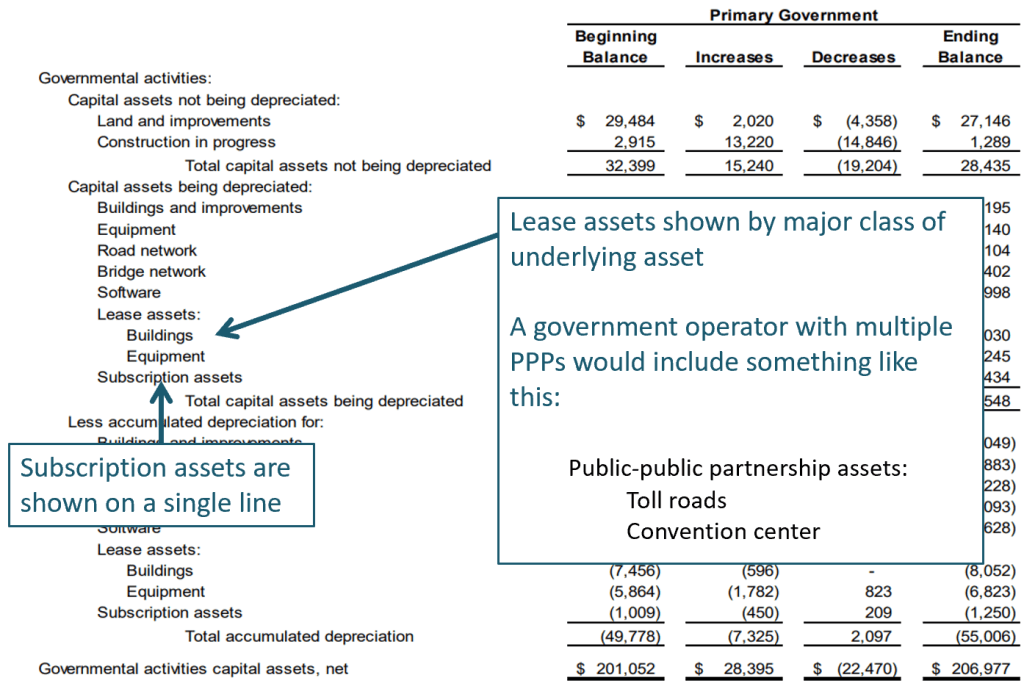
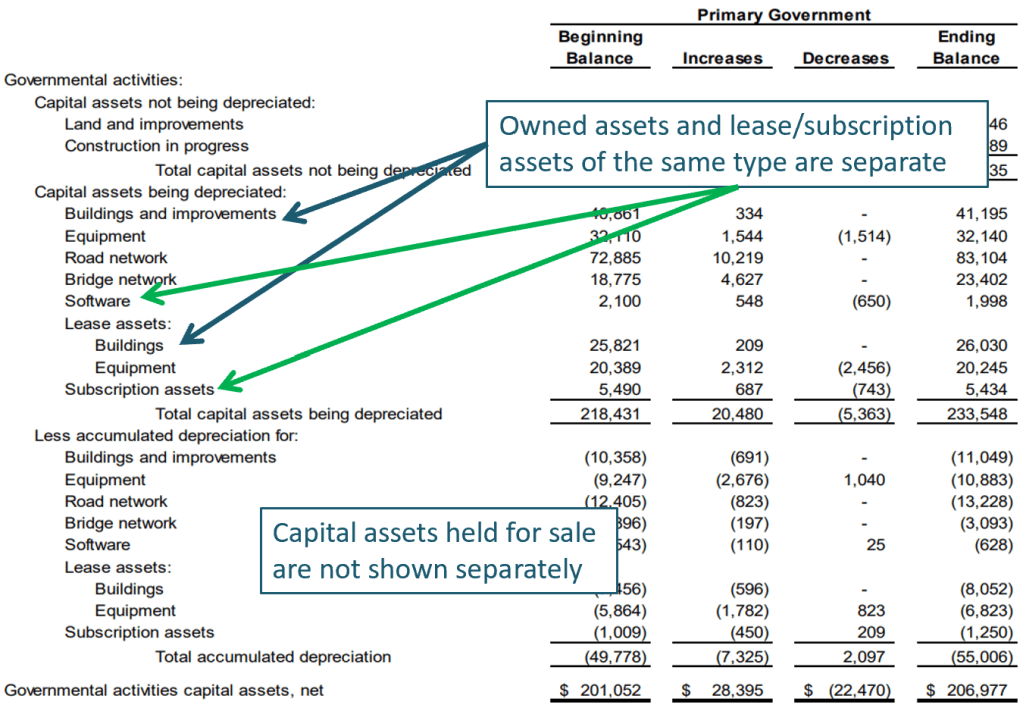
Statement 104 consolidates existing guidance for the level of detail at which certain capital assets are required to be disclosed in the “roll-forward” note (see the picture below) and establishes new requirements for other types of capital assets.
Existing requirements carried forward:
- Intangible right-to-use assets from leases—by major class of underlying asset (e.g., buildings, equipment, vehicles)
- Intangible right-to-use assets from SBITAs—in the aggregate.
New requirements:
- Intangible right-to-use assets from public-public partnerships—by major class of underlying asset (e.g., arenas, toll roads)
- Other types of intangible assets—by major class of asset (e.g., easements, patents)
- Right-to-use assets should be separate from owned assets of the same type.
Source: Statement 103
Held for Sale
Every year, governments will now need to evaluate whether any of their capital assets should be classified as “held for sale.” A capital asset is considered held for sale if (1) the government has decided to sell the asset AND (2) it is probable (likely) that the sale will be finalized within one year. Statement 104 provides examples of the factors that should be considered when evaluating probability of the sale, such as whether there are regulatory hurdles that must be cleared and whether the asset is in sellable condition.
Capital assets held for sale should not be disclosed separately from other capital assets in in the roll-forward note, but governments should disclose the following information about them:
- Historical cost and accumulated depreciation/amortization, by major class of asset, and separately for governmental and business-type activities
- Carrying amount of debt for which the assets are pledged as collateral.
Looking for help implementing GASB Statements? Mead Accountability Advisors knows all the ins and outs of getting governments to compliance quickly and efficiently. Contact us at dean@dmmead.com or 914-497-3293.
© Dean Michael Mead. All rights reserved.


Leave a Reply